
Lined, interlined, or unlined: choosing custom draperies for Monticello and Cultural District homes
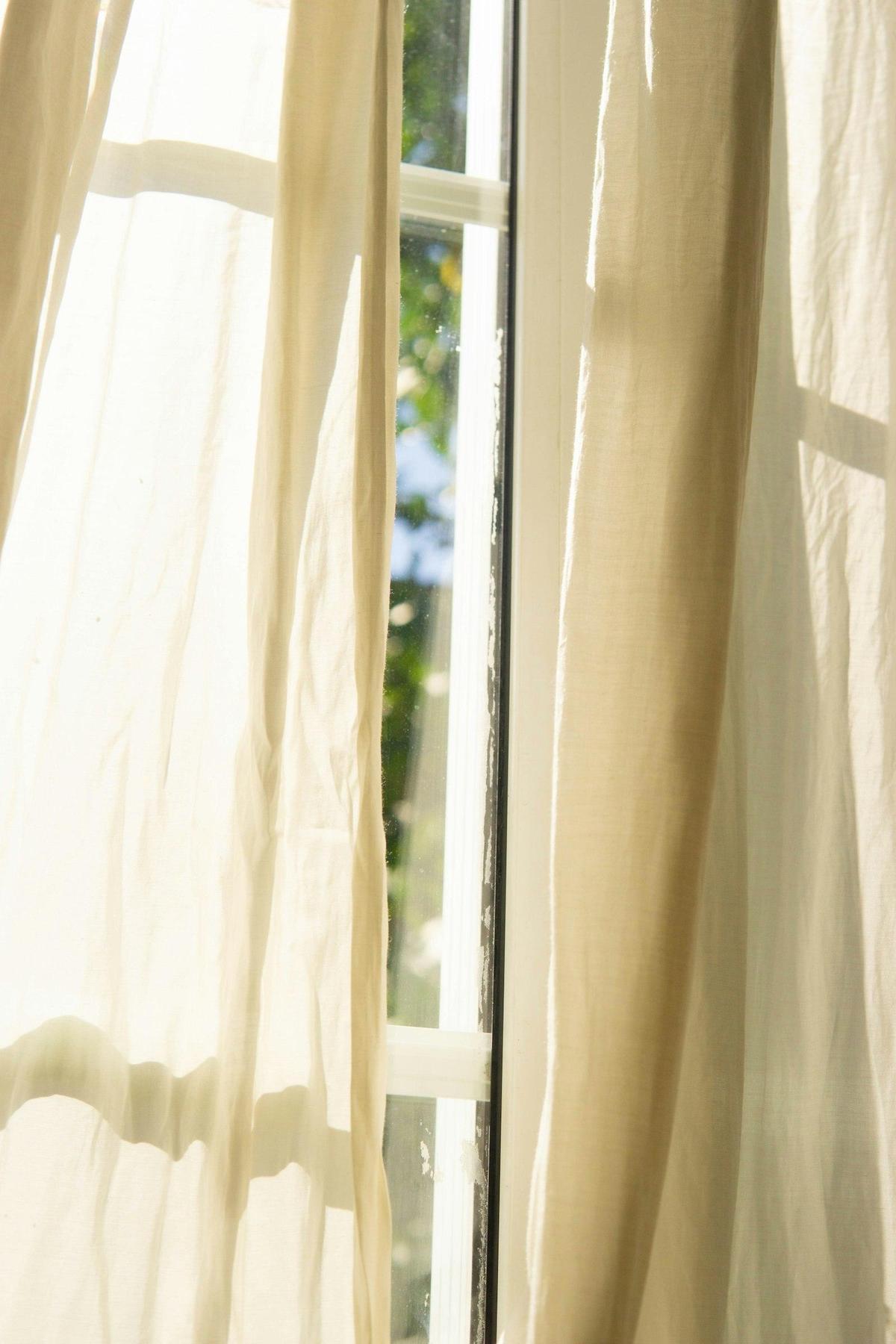
Unlined draperies let light through and move easily, which suits sheers and casual rooms. A standard lining adds body, privacy, and protection from sun fading. A blackout lining darkens the room. Interlining adds a soft middle layer for the fullest, most insulated drape. Most rooms want a standard lining; bedrooms often want blackout.
The lining is the part of a drapery nobody sees and everybody notices. It changes how much light comes through, how the fabric falls, how long it lasts in the sun, and how the window looks from the street. If you live in Monticello or around the Cultural District and your front rooms face the street, that last point matters more than you might expect.
Unlined
An unlined panel is just the face fabric, hemmed. Light passes through it and shows the weave. It is the right choice for sheers and for linens where you want a relaxed look and a glow. The tradeoffs: little privacy at night with the lights on, little protection from the sun, and the fabric itself takes all the fading.
Lined
A standard lining is a second layer of plain fabric sewn behind the face fabric. It does four things at once:
- It gives the panel weight, so the folds fall evenly instead of collapsing.
- It adds privacy, especially at night.
- It shields the face fabric from direct sun, which helps it keep its color. This matters most with silks and deep colors.
- It gives every window the same neat, even look from outside.
For most living and dining rooms, this is where we start.
Blackout
A blackout lining blocks light rather than filtering it. It is the usual choice for bedrooms, nurseries, and media rooms. Light can still slip in around the edges of any drapery, so for a truly dark room we often pair blackout panels with a shade behind them, or mount the rod wider and higher than the window to cover the gaps.
Interlined
Interlining is a soft layer, often a flannel-like cloth, sewn between the face fabric and the lining. It is a traditional technique for fine draperies. The result is fuller, rounder folds, a more luxurious hand, better insulation against heat and cold at the glass, and extra protection for delicate face fabrics. It takes more time in the workroom, so it is usually saved for the rooms where the draperies are the centerpiece.
How to choose, room by room
- Living and dining rooms: lined, or interlined if the draperies are a focal point.
- Bedrooms: blackout lined, often with a shade behind.
- Sunrooms and kitchens: unlined or lightly lined, when softness matters more than darkness.
- Any window with strong afternoon sun: lined at minimum, to protect the fabric. See our post on west-facing windows.
Made here, measured by us
Every drapery we sell is cut and sewn in our own workroom on West Vickery, in fabric you choose from the fabric wall: Colefax & Fowler, Scalamandre, Schumacher, Magnolia, Kravet, and Fabricut. We measure the windows ourselves and hang the finished panels. Bring a swatch of your sofa or a paint chip and we will pull bolts and hold them up with the lining behind them, so you can see the difference in real light.
When you are ready, request a free consultation.
We do not quote drapery prices online. Yardage, lining, and the size of the window all change the answer, and we would rather give you a real number after we have measured.