
Reupholster or replace? Deciding on a favorite chair in Ridglea
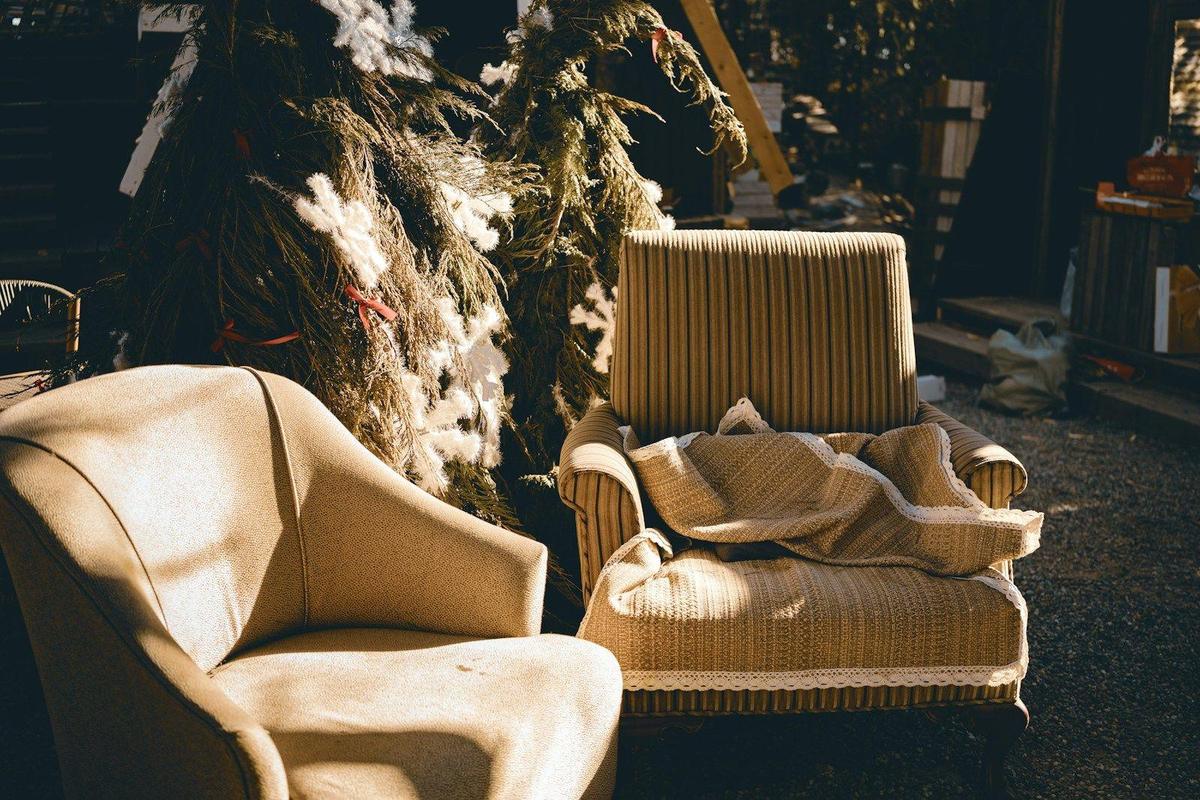
Reupholster when the frame is solid and you love the shape; replace when the frame is weak, wobbly, or built from particleboard. Worn fabric, flat cushions, and even tired springs can all be redone. A broken or poorly built frame is the one thing new fabric cannot fix.
Ridglea, out along Camp Bowie by the Ridglea Theater, is one of the west side neighborhoods where you still find a lot of well built older furniture: the wingback that came with the house, the dining chairs from a grandparent, the sofa with good lines and a sad cover. Before you haul one to the curb, it is worth ten minutes to find out whether it has a second life in it. Here is how we look at a piece when it comes into our workroom.
Start with the frame
The frame decides everything. A few checks you can do at home:
- Lift one corner. A solid wood frame feels heavy for its size. A light piece often means particleboard or thin softwood.
- Rock it. Press on the arms and back. Some give in the cushions is normal; a frame that shifts, creaks, or twists is not.
- Look underneath. Remove the dust cover if you can. Wood joined with dowels or corner blocks is a good sign. Staples holding pressed board together is not.
A loose joint on a good hardwood frame can often be reglued and reinforced during reupholstery. A frame that is weak all over usually cannot be saved economically.
Then the springs and the cushions
Traditional pieces are often built with eight-way hand-tied springs, where each coil is tied to its neighbors by hand. Many newer pieces use sinuous, zigzag springs. Both can be retied, replaced, or re-supported when a piece is stripped down. Sagging seats are rarely a reason to give up on a chair with a good frame.
Cushions are the easy part. New foam and wrapping restore the seat, and you can choose firmer or softer than the original.
Choosing the fabric
This is where reupholstery gets better than buying new: you are not limited to the three fabrics a furniture store offers. A few things we walk through with you at the fabric wall:
- How the piece is used. A family room chair needs a fabric rated for heavy use. Ask for the abrasion rating, usually listed in double rubs, and we will show you what it means for the bolts you are considering.
- Sun. A chair beside a bright window will fade. Some fibers and dyes hold up to sun far better than others.
- Pattern. Stripes, plaids, and large repeats have to be matched across cushions and seams, which takes more yardage than a solid. We work out the yardage for you.
- The room. Bring a pillow, a paint chip, or a photo. Fabric chosen next to the room it lives in is fabric you will still like in ten years.
When replacing is the honest answer
If the frame is weak, if the piece was never comfortable, or if you simply do not like the shape, reupholstering it is money spent on the wrong chair. We will tell you that. The best candidates are pieces with good bones that you would buy again if you saw them in a store.
How to start
Take a photo of the piece from the front and side, and one of the underside if you can. Bring the photos, or the piece, to the showroom at 5700 W Vickery Blvd, or request a free consultation. We do not quote upholstery prices online, because the answer depends on the frame, the fabric, and the yardage, and all three are easier to judge in person.
Our workroom also makes custom draperies and bedding, so a recovered chair and a new set of panels can come from the same bolt. See the workroom.